What Are Thermal Management Products and How Are They Used in Electrical Systems?
Thermal management products are components and materials used to control, transfer, spread, or remove heat generated by electrical and electronic equipment. They include heat sinks, thermal interface materials, cooling fans, heat pipes, cold plates, enclosures, and related mounting accessories. I use them to help keep components within their specified operating temperature range, because excessive heat can reduce performance, accelerate aging, or trigger protective shutdowns.
In an electrical system, a thermal solution normally connects a heat-producing component to a larger heat-dissipation path. That path may move heat through conduction into a heat sink, across an interface material, and then into surrounding air or a liquid cooling loop. The correct product depends on heat load, available space, airflow, operating environment, electrical insulation requirements, and installation method.
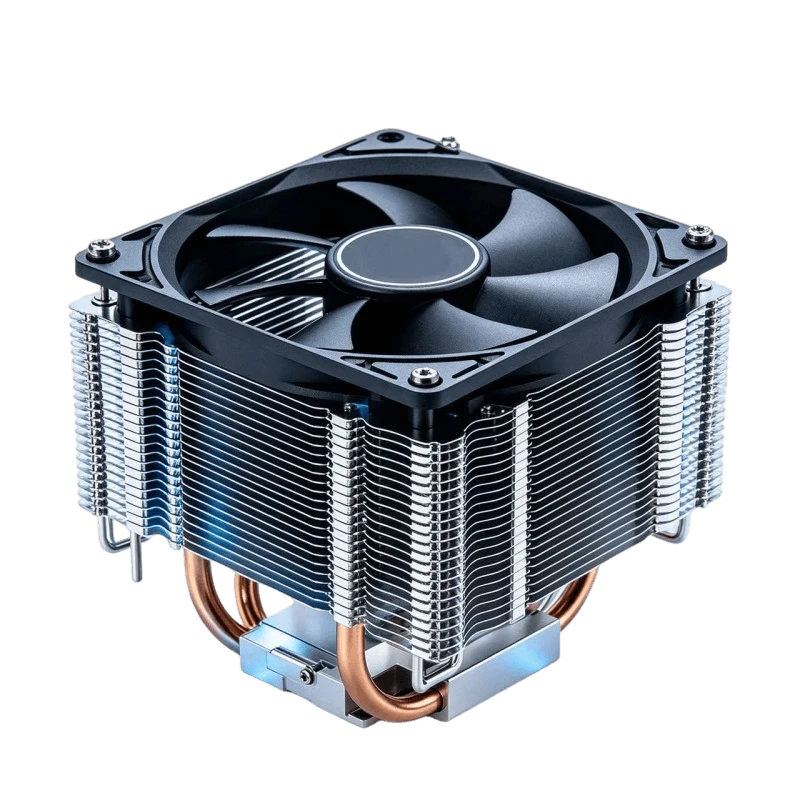
What Thermal Management Products Do
Electrical components convert part of their input energy into heat during operation. Power semiconductors, processors, batteries, transformers, LED modules, relays, and power supplies can all require thermal control. Thermal management products reduce the resistance between the heat source and the final cooling medium, allowing heat to move away more effectively.
Core Thermal Functions
Heat conduction: Heat sinks, metal chassis, cold plates, and heat spreaders transfer heat away from a component.
Interface improvement: Thermal pads, grease, phase-change materials, and gap fillers reduce air gaps between uneven surfaces.
Heat dissipation: Finned surfaces increase the area available for natural or forced convection.
Air movement: Fans and blowers move heated air away from the component and bring cooler air into the enclosure.
Liquid cooling: Cold plates and liquid loops remove heat where air cooling cannot provide enough capacity within the available space.
Environmental control: Filters, vents, thermal enclosures, and mounting systems help manage dust, moisture, vibration, and installation constraints.
For example, a semiconductor dissipating 100 W needs a planned path from its case or mounting surface to the ambient environment. If the total thermal resistance of that path is 0.5 °C/W, the theoretical temperature rise above ambient is approximately 50 °C before other system effects are considered. This simple relationship shows why product selection must consider the complete thermal path rather than one component alone.
How Thermal Management Is Used in Electrical Systems
Power Electronics and Control Equipment
In inverters, motor drives, rectifiers, and industrial control cabinets, switching devices can generate concentrated heat. I may recommend an aluminum heat sink, a thermally conductive interface pad, and controlled airflow when the enclosure and heat load permit air cooling. The final design should be checked against the component manufacturer’s maximum case, junction, or operating temperature limits.
Data, Telecom, and Embedded Electronics
Processors, communication modules, power converters, and compact embedded systems often have limited installation space. Low-profile heat sinks, heat spreaders, vapor chambers, thermal pads, and small fans can be combined to transfer heat without interfering with connectors or adjacent components. In these applications, acoustic noise, fan reliability, dust accumulation, and service access may be as important as thermal capacity.
LED Lighting and Display Equipment
LED modules convert electrical energy into light and heat, and the heat must be conducted away from the LED board or substrate. A properly matched heat sink, mounting surface, and thermal interface can support more stable operation. The required design depends on LED power, ambient temperature, enclosure geometry, installation orientation, and whether natural convection is sufficient.
Battery Packs and Energy Equipment
Battery systems require temperature control for operating consistency and system safety. Depending on the cell format and power level, solutions may include thermal pads, aluminum plates, heat spreaders, forced-air cooling, or liquid cold plates. I recommend evaluating temperature uniformity across the pack, not only the temperature of the hottest individual cell.
Common Types and Material Options
| Product type | Primary function | Typical selection considerations |
|---|---|---|
| Heat sink | Transfers heat into surrounding air | Thermal resistance, dimensions, fin design, airflow, surface finish |
| Thermal interface material | Fills microscopic air gaps between surfaces | Thickness, compressibility, conductivity, insulation, rework requirements |
| Cooling fan or blower | Creates forced airflow | Airflow, static pressure, voltage, noise, dust protection, service life |
| Cold plate | Transfers heat to a liquid cooling circuit | Heat load, flow rate, pressure drop, materials, leak-control requirements |
| Heat spreader or heat pipe | Distributes heat across a larger area | Orientation, geometry, heat input, contact area, installation clearance |
Aluminum is widely considered when low weight, corrosion resistance, and manufacturability are important. Copper offers higher thermal conductivity but generally adds weight and material cost. Interface materials may be electrically insulating or electrically conductive, so I treat dielectric requirements as a design decision rather than assuming that every thermal material is safe around exposed conductors.
Key Specifications Buyers Should Review
Thermal Performance
Thermal resistance, usually expressed in °C/W or K/W, indicates how much temperature rise is associated with a given heat flow under defined conditions. Lower thermal resistance can support better heat transfer, but the value must be interpreted with the test method, airflow, mounting pressure, and contact conditions. Thermal conductivity, measured in W/m·K, is useful for comparing materials, but it does not alone determine the performance of a complete assembly.
Jadecooling supply professional and honest service.
Mechanical and Electrical Compatibility
Buyers should confirm mounting holes, component footprint, allowable compression, flatness, weight, and available clearance. For electrical systems, dielectric strength, insulation resistance, grounding, and material compatibility may also be required. A thermal pad that performs well mechanically may not be suitable if it does not meet the system’s isolation requirements.
Operating Environment
Ambient temperature, humidity, dust, vibration, altitude, and chemical exposure can influence the useful performance of a cooling assembly. Fan-based systems may require filters or maintenance access in dusty environments, while passive systems may be preferred where moving parts are undesirable. I recommend defining the expected operating range before choosing a product size or cooling method.
How B2B Buyers Can Select a Suitable Solution
1. Define the Heat Load
Start with the actual or estimated heat generated by the target component and the total system. Use electrical losses, supplier specifications, measured temperatures, or engineering calculations where available. Separate continuous heat load from short-duration peak load, because a solution suitable for a brief pulse may not be suitable for continuous operation.
2. Establish Temperature Limits
Identify the maximum allowable temperature for the component, interface material, enclosure, and surrounding parts. Then define the maximum ambient temperature and acceptable temperature rise. This gives the design team a practical thermal target instead of selecting a heat sink based only on physical size.
3. Check Space, Airflow, and Assembly
Measure the available height, width, mounting area, and distance from nearby components. Confirm whether natural convection, fan-assisted airflow, or liquid cooling is realistic for the enclosure. I also review assembly time, fastener access, replacement requirements, and whether the product can be integrated into the existing production process.
4. Request Engineering Information
For a supplier inquiry, provide heat load, component dimensions, ambient temperature, target temperature, mounting details, voltage requirements, annual demand, and required delivery schedule. Drawings, photos, and airflow information can reduce unnecessary specification changes. If the design is not finalized, I can help compare a standard solution with a customized thermal assembly, subject to the information available.
How Jadecooling Supports Thermal Management Projects
As an electronic thermal management solutions manufacturer and supplier, Jadecooling can support B2B buyers in reviewing thermal management product requirements for electrical equipment and supplies. Our role may include discussing heat sink geometry, thermal interface selection, cooling method, dimensions, material preferences, and assembly conditions. The appropriate support depends on the project scope and the technical information provided by the buyer.
For sourcing, I recommend confirming drawing revision, material specification, surface treatment, packaging, inspection requirements, sample quantity, and expected production volume before placing an order. Buyers should also ask how design changes will be controlled and which performance information can be supplied for the proposed configuration. These steps help reduce the risk of receiving a product that fits mechanically but does not meet the complete thermal design requirement.
Key Takeaways for Electrical System Buyers
Thermal management products control heat through conduction, interface improvement, convection, spreading, or liquid cooling.
A complete thermal path is more important than selecting an isolated heat sink or pad.
Thermal resistance, measured in °C/W or K/W, should be reviewed together with airflow and mounting conditions.
Material choice affects thermal conductivity, weight, electrical insulation, corrosion resistance, and cost.
Heat load, temperature limits, environmental conditions, mechanical clearance, and production requirements should guide purchasing decisions.
Conclusion: Choosing the Right Thermal Management Product
Thermal management products are essential tools for moving and controlling heat in power electronics, control equipment, lighting, embedded systems, battery packs, and other electrical applications. The best solution is not necessarily the largest or most conductive product; it is the solution that matches the heat load, temperature limits, available space, environment, assembly method, and sourcing requirements. I recommend defining these conditions first and then comparing heat sinks, interface materials, airflow products, heat spreaders, or cold plates as part of one complete thermal path.
For your next step, prepare the component drawing, heat-load estimate, ambient temperature, mounting information, and target quantity. Share these requirements with Jadecooling for a focused discussion of suitable thermal management products, customization options, and commercial considerations. This approach gives your engineering and purchasing teams a clearer basis for evaluating an electronic thermal management solution.
If you are looking for more details, kindly visit Thermal Management Products.

评论
发表评论